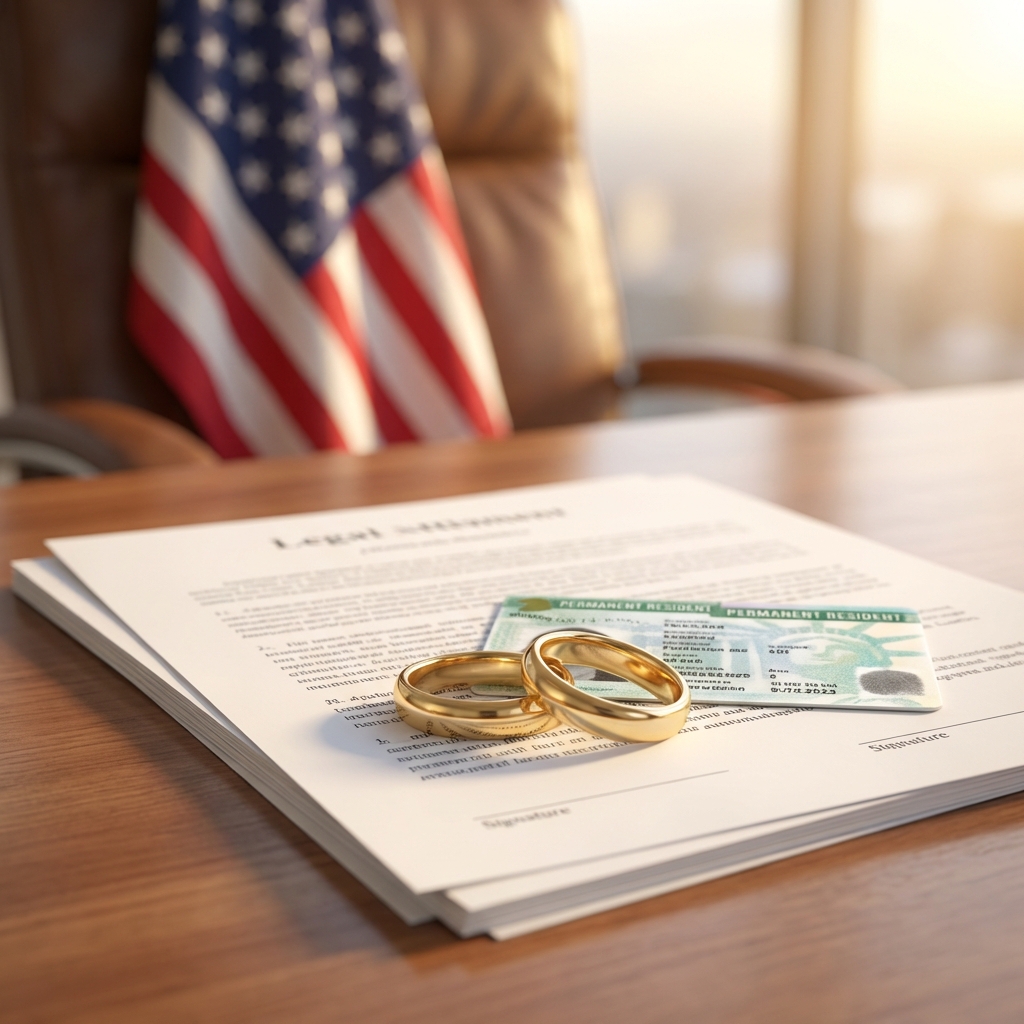
When USCIS evaluates a marriage-based green card application, the central question is whether the marriage is "bona fide"—entered into in good faith, not solely for immigration benefits. Understanding what evidence actually matters can mean the difference between approval, a lengthy interview, or denial.
Key Takeaways
- USCIS looks for evidence of a shared life, not just a ceremony
- Strong cases show financial, residential, and life-planning integration
- Inconsistencies between documents are major red flags
- Quality of evidence matters more than quantity
What Does "Bona Fide Marriage" Mean?
A bona fide marriage is one that was entered into with the genuine intention of establishing a life together as husband and wife—not primarily for immigration purposes. This doesn't mean immigration can't be a benefit; it means the marriage itself must be real and ongoing.
USCIS officers are trained to identify marriages entered solely to circumvent immigration laws. They look at the totality of the circumstances, examining evidence that demonstrates the couple lives as a married unit.
Categories of Evidence That Matter
1. Financial Integration
One of the strongest indicators of a genuine marriage is financial interdependence:
- Joint bank accounts — Showing regular deposits, shared expenses, and ongoing activity
- Joint credit cards — With both names on the account
- Joint tax returns — Filing as "Married Filing Jointly"
- Shared bills and utilities — In both names when possible
- Life insurance — Naming each other as beneficiaries
- Health insurance — Coverage under the same plan
2. Shared Residence
Living together is fundamental to proving a bona fide marriage:
- Lease or mortgage — Both names on the document
- Utility bills — Addressed to both spouses
- Official correspondence — Driver's licenses, voter registration, IRS documents at the same address
- Affidavits — From neighbors, landlords, or family members who can attest to your cohabitation
"The most compelling cases show a pattern of shared life over time. It's not about having one impressive document—it's about consistency across months and years of living together."
3. Evidence of a Shared Life
Beyond finances and residence, USCIS wants to see that you function as a couple:
- Photos together — From different occasions, settings, and time periods (not just the wedding)
- Travel records — Trips taken together, hotel reservations, flight itineraries
- Communication records — If there were periods of separation
- Shared interests — Gym memberships, club memberships, religious community involvement
- Children together — Birth certificates, school records, medical records
Common Mistakes That Raise Red Flags
Inconsistent Information
Perhaps the biggest red flag is when information doesn't match across documents:
- Different addresses listed on different forms
- Timeline discrepancies (when you met, started dating, moved in together)
- Conflicting statements between the I-130 and I-485
- Different answers given at different interviews
Minimal Evidence
A stack of wedding photos alone is rarely sufficient. If you've been married for two years but can only show wedding pictures and a marriage certificate, that's concerning. USCIS expects to see an evolving relationship reflected in documents.
Cultural Differences Without Explanation
Some legitimate marriages look unusual to USCIS officers unfamiliar with certain cultural practices. If your marriage was arranged, if there's a significant age gap, or if you met through non-traditional means, be prepared to explain and provide context.
Pro Tip: Build Your Case Over Time
Start collecting evidence from day one. Create a shared folder where you save utility bills, photos, travel documents, and anything else that shows your life together. The earlier you start, the stronger your case will be.
The Marriage Interview
If USCIS isn't satisfied with the documentary evidence, or if your case has potential red flags, you'll be called for a Stokes interview—where both spouses are questioned separately and their answers compared.
Typical questions include:
- How did you meet?
- Who proposed and how?
- Describe your home (layout, furniture, décor)
- What did you have for dinner last night?
- What's your morning routine?
- What did you do for the last holiday?
The goal isn't to memorize answers but to know your own life well enough that your answers match naturally.
Conditional vs. 10-Year Green Cards
If you've been married for less than two years when your green card is approved, you'll receive a conditional green card valid for two years. Before it expires, you must file Form I-751 (Petition to Remove Conditions) with additional evidence that your marriage is still valid.
If you've been married for more than two years at approval, you'll receive a standard 10-year green card.
What If You're in a Genuine Marriage But It Looks Suspicious?
Sometimes legitimate marriages have characteristics that raise eyebrows:
- Short courtship period
- Met online or through an app
- Significant age difference
- Language barriers
- Previous immigration-related marriages
- Previous visa denials or overstays
None of these factors are disqualifying, but they require more careful documentation and preparation. This is often where legal representation becomes essential.
The 'Stokes Interview': What Really Happens?
If USCIS has doubts about your marriage after reviewing your initial application and interview, you may be called for a second interview, commonly known as a "Stokes interview" or fraud interview. During this high-stress session, you and your spouse will be separated and questioned individually. The officer will then compare your answers to see if they align.
Questions can get incredibly granular: "What color is your spouse's toothbrush?", "Who slept on which side of the bed last night?", "Where was your last date night?". Discrepancies here can be fatal to your case. The best evidence against a Stokes interview is a waterproof initial application with overwhelming bona fide evidence.
Social Media Scrutiny
In today's digital age, USCIS officers routinely check public social media profiles. Does your relationship status match your application? Do you post photos with your spouse? Conversely, do you post photos that contradict your claims? We advise clients to audit their social media presence to ensure it accurately reflects the reality of their shared life.
Red Flags That Trigger Investigation
Beyond the obvious, subtle patterns can trigger fraud investigations:
- Large Age Gaps: While legal, significant age differences (15+ years) invite extra scrutiny.
- Language Barriers: If the couple does not share a common language, officers will question how the relationship developed.
- Different Addresses: Maintaining separate residences for work or school is possible but requires substantial evidence of commingling finances and regular visits.
- Previous Marriages: A petitioner or beneficiary with a history of filing petitions for others will be looked at closely.
Timeline Realities: I-130 vs. Concurrent Filing
For spouses of U.S. citizens locally in the U.S., "concurrent filing" (filing I-130 and I-485 together) is the gold standard, often resulting in work permits within 3-6 months and green cards in 6-12 months. However, for spouses of Green Card holders (F2A category), the "Visa Bulletin" dictates when you can file. Recently, this category has seen backlogs, meaning you might file the I-130 first and wait years to file the I-485. Understanding where you fall in the Visa Bulletin is critical to preventing filing rejections.
Detailed Evidence Checklist: Going Beyond the Basics
While most applicants provide the standard marriage certificate and lease, successful cases largely depend on the "secondary evidence" that paints a vivid picture of your life. Detailed below is a comprehensive checklist of items you should diligently gather:
- Utility Bills Needed: Do not just provide one month. Provide one bill from every 3-month period. Vital utilities include:
- Electricity (Pepco/Dominion)
- Gas/Water/Sewage
- Internet/Cable (Xfinity/Verizon)
- Cell Phone Family Plans (showing both numbers)
- Financial Cominglements:
- Joint Bank Statements: Print the *full* statement, not just the summary page. Highlight rent payments and grocery purchases.
- Authorized User Credit Cards: Even if you don't have a joint card, adding a spouse as an authorized user creates a credit report trail.
- Beneficiary Designations: 401(k), IRA, and Life Insurance updates are powerful because they show long-term intent.
- Soft Evidence (The "Love" Proof):
- Cards/Letters exchanged on birthdays/anniversaries.
- Text message logs (exported discussions about dinner, groceries, bad days).
- Flight itineraries showing seats next to each other.
- Hotel bookings with both names listed.
Understanding the "Two-Year Rule" (Conditional Residency)
If you have been married for less than two years on the day your Green Card is approved, you will receive "Conditional Resident" status (CR-1). This is valid for only two years. This is not a renewable card. You MUST file Form I-751 (Petition to Remove Conditions) during the 90-day window before the card expires.
The Danger Zone: Many couples forget this deadline. If you file one day late without a "good cause" explanation, your status is automatically terminated, and you can be placed in removal proceedings. We recommend setting calendar reminders 21 months after approval.
Separation/Divorce during CR-1: If you divorce before the two years are up, you cannot file the standard joint I-751. You must file for a "Waiver of the Joint Filing Requirement." You will need to prove the marriage was entered into in good faith but failed. Evidence requirements for waivers are significantly higher—you need to show more financial intermingling than a standard case to prove it wasn't a sham.
Red Flags That Trigger Fraud Interviews
USCIS adjudicators are trained to spot patterns that deviate from statistical norms. While innocent explanations often exist, the following factors will almost guarantee a scrutinized interview:
- Large Age Disparities: A gap of 15-20+ years, particularly where the younger spouse is the beneficiary, invites questions about intentions.
- Language Barriers: If the couple does not share a fluent common language, officers will test how they communicate. "We use Google Translate" is rarely accepted as a foundation for a lifelong marriage.
- Different Addresses: Living apart (even for work) is the single biggest red flag. If you must live apart, you need mounds of evidence regarding visits (bus tickets, gas receipts) and a logical end-date to the separation.
- Secret Marriages: If family members (parents/siblings) do not know about the marriage or did not attend the wedding, officers will suspect the marriage is hidden because it is fake.
The Interview Experience: Detailed Breakdown
The interview takes place at a local USCIS Field Office (e.g., Fairfax or Washington DC for DMV residents). Here is the taxonomy of a standard interview:
- Swearing In: You will promise to tell the truth. Lying here is a federal crime.
- Review of Forms: The officer will go through the I-130 and I-485 question by question to verify accuracy.
- The "Love Story": "How did you meet?" "Who proposed?" "What did you do for your last anniversary?" They want to see natural, corroborating storytelling.
- The "Hard" Questions: If they suspect fraud, they may separate you (Stokes Interview) and ask microscopic questions: "What color is the shower curtain?" "What side of the bed do you sleep on?" "How does your spouse take their coffee?"
Don't Risk Your Immigration Future—Get Professional Advice
Every case is unique, and small mistakes can lead to years of delays or denial. Don't rely on general online information. Schedule a consultation to discuss your specific situation with an experienced attorney who can protect your rights.
We offer a free 15-minute consultation to review your case.
Get Your Free Consultation NowFrequently Asked Questions
How long does the marriage green card process take?
If the petitioning spouse is a U.S. citizen, the process typically takes 12-24 months, though this varies by USCIS workload and whether an interview is required. Cases involving a green card holder as petitioner can take significantly longer.
Do we need to show every joint expense?
No—quality over quantity. A few months of joint bank statements with regular shared expenses is more valuable than a hundred random receipts. Choose evidence that clearly shows your names together.
What if we don't have joint bank accounts?
While joint accounts are helpful, they're not required. Focus on other evidence: shared lease, utility bills, tax returns, insurance beneficiaries, and third-party affidavits from people who know you as a couple.
Can a previous denied marriage case hurt my new application?
Potentially, yes. USCIS has records of previous applications. If you were previously denied for a marriage-based benefit, you'll need to be prepared to address this and demonstrate that your current marriage is legitimate.
Can we apply if we don't have a lot of money?
The U.S. petitioner must prove they can support the beneficiary at 125% of the Federal Poverty Guidelines. If they don't earn enough, you will need a "Joint Sponsor"—a U.S. citizen or LPR who earns enough and is willing to sign an Affidavit of Support (Form I-864).
What happens if we divorce before the 2 years are up?
If you have a Conditional Green Card and you divorce, you cannot file the standard I-751 jointly. You must file for a "waiver" of the joint filing requirement. You will have to prove the marriage was bona fide at inception but failed due to irreconcilable differences. These are complex cases requiring strong legal arguments.
Disclaimer: This article is for general information only and is not legal advice. Every case is fact-specific. For legal advice regarding your specific situation, consult with a licensed immigration attorney.