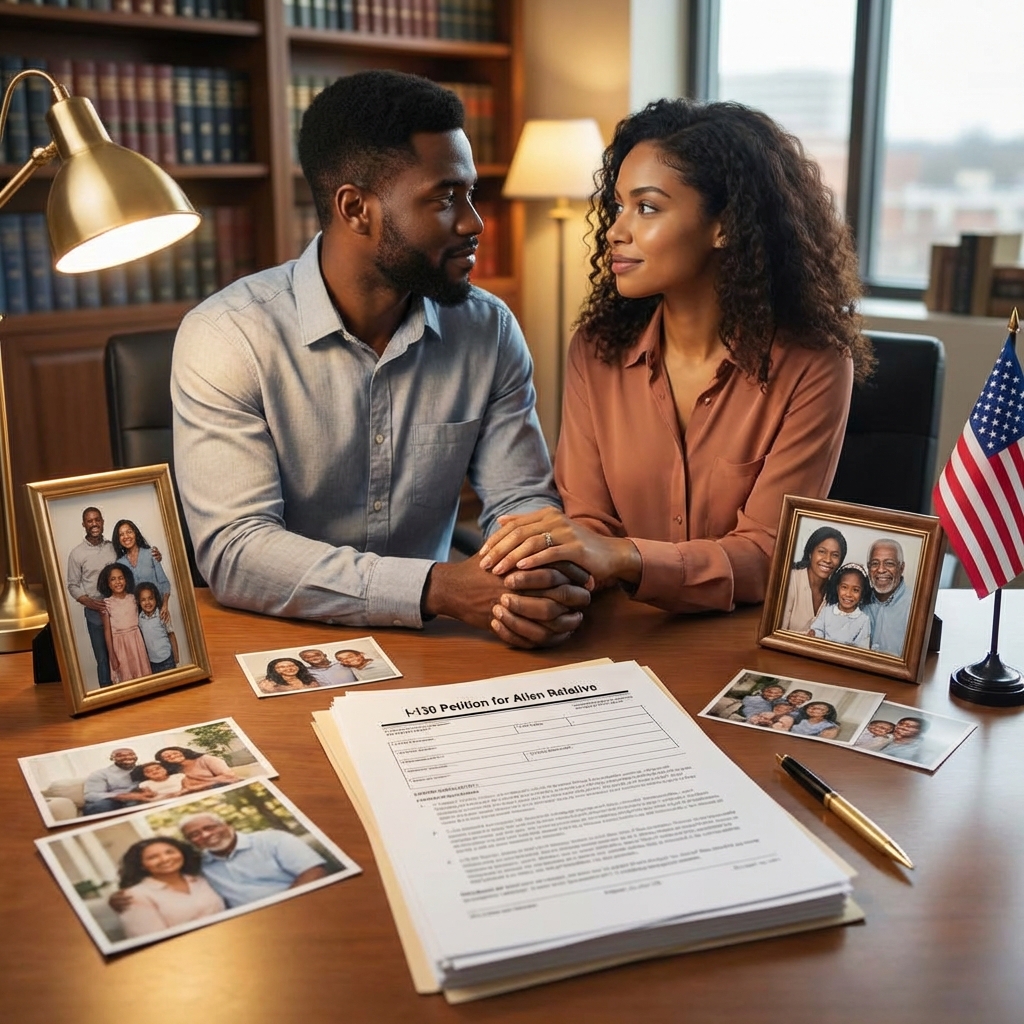
The I-130 petition is the foundation of family-based immigration, yet simple mistakes can add months or years to your wait. Here's how to avoid the most common pitfalls.
Key Takeaways
- Accuracy in names, dates, and relationship documentation is critical
- Incomplete evidence packages cause RFEs and delays
- Timing matters for derivative beneficiaries
- Address changes must be reported promptly
The Most Common Mistakes
1. Name Discrepancies
Your beneficiary's name must match exactly across all documents. Variations in spelling, order, or format will trigger delays.
2. Inadequate Relationship Evidence
USCIS requires proof of the qualifying relationship. Marriage certificates, birth certificates, and other civil documents must be authentic and properly translated.
3. Missing Photographs
Passport-style photos that meet USCIS specifications are required. Outdated or incorrect photos cause unnecessary delays.
Building a Strong Petition
- Gather all civil documents early
- Obtain certified translations
- Organize evidence logically
- Keep copies of everything submitted
- Track your case online
Proving the Relationship: When Marriage Certs Aren't Enough
While a marriage or birth certificate is the primary evidence, USCIS often demands more, especially from countries with high fraud rates or irregular record-keeping. If your documents are late-registered or contain errors, be prepared for a Request for Evidence (RFE).
DNA Testing: In parent-child cases where documents are inconclusive, USCIS may suggest voluntary DNA testing. This must be done by an AABB-accredited lab. Do not proactively get a DNA test from a pharmacy kit; USCIS will not accept it. Wait for the RFE or agency instruction to ensure chain of custody.
The Adam Walsh Act: A Hidden Barrier
Under the Adam Walsh Child Protection and Safety Act, US citizens or LPRs who have been convicted of any "specified offense against a minor" (which is broadly defined) are barred from petitioning for any family member—even a spouse or parent. This is a complex area of law requiring a specialized waiver arguing "no risk" to the beneficiary. If the petitioner has a criminal record, screening for this issue is the first step.
Consular Processing vs. Adjustment of Status
The I-130 is just step one. Step two depends on where the beneficiary is:
- Adjustment of Status (I-485): If the beneficiary is legally in the US (and is an Immediate Relative, or has current priority date + lawful status). This keeps the family together during processing.
- Consular Processing (NVC): If the beneficiary is abroad. After I-130 approval, the file moves to the National Visa Center for document collection, then to the US Embassy for an interview. This process currently takes significantly longer due to embassy backlogs.
Consular Processing: The NVC Stage
Once the I-130 is approved for a relative abroad, the case moves to the National Visa Center (NVC). This is a document-heavy black hole. You must upload:
- DS-260 (Online Immigrant Visa Application).
- Police Certificates (from every country lived in since age 16).
- Affidavit of Support (I-864) with IRS transcripts.
- Civil Documents (Birth/Marriage certs).
Common NVC Delay: "Police Certificates" are the most rejected document. Each country has a specific issuing authority (e.g., Passport Office vs. Local Police). You must check the Dept of State Reciprocity Table to ensure you get the right one.
F4 Sibling Petitions: The Long Wait
Filing for a brother or sister (F4 category) takes 15-20+ years for most countries. Is it worth it? Yes, as an "insurance policy." But it is not a short-term solution. During the wait, the beneficiary has NO right to live in the US and must qualify for their own visas (H-1B, L-1) to be here.
Don't Risk Your Immigration Future—Get Professional Advice
Every case is unique, and small mistakes can lead to years of delays or denial. Don't rely on general online information. Schedule a consultation to discuss your specific situation with an experienced attorney who can protect your rights.
We offer a free 15-minute consultation to review your case.
Get Your Free Consultation NowCan I file for my fiance with an I-130?
No. The I-130 is for family members (spouses, children, parents, siblings). If you are not married yet, you must use the I-129F Fiance Visa petition, or get married and then file the I-130.
How long does the I-130 take?
For Immediate Relatives (Spouse/Parent of US Citizen), it takes 10-14 months. For F2A (Spouses of LPRs) or Siblings (F4), it can take years even for the I-130 approval, though the priority date is the main waiting factor.
Disclaimer: This article is for general information only and is not legal advice. Every case is fact-specific. For legal advice, consult a licensed attorney.